
The hall overflowed with people for an afternoon of storytelling honouring First Nations women, hosted by Aunty Dawn Daylight. The celebration, learning and entertainment was coupled with popcorn, treats, and drinks. T-shirts and bags were up for sale.
Aunty Dawn is well known around West End as a songwriter and performer, community leader, a giver and raconteur. She is of the Dungibara and Yuggera peoples, with South Sea Islander heritage. Her afternoon invitation went out to the whole interested community because as she said “it’s like throwing a stone in the water, the ripples go out – the stories, the music, the art: the culture includes everyone.”
Aunty Dawn welcomed everyone with song, reminders of the hardship years, and words of wisdom. She was backed up (as always) by cellist Tilly.
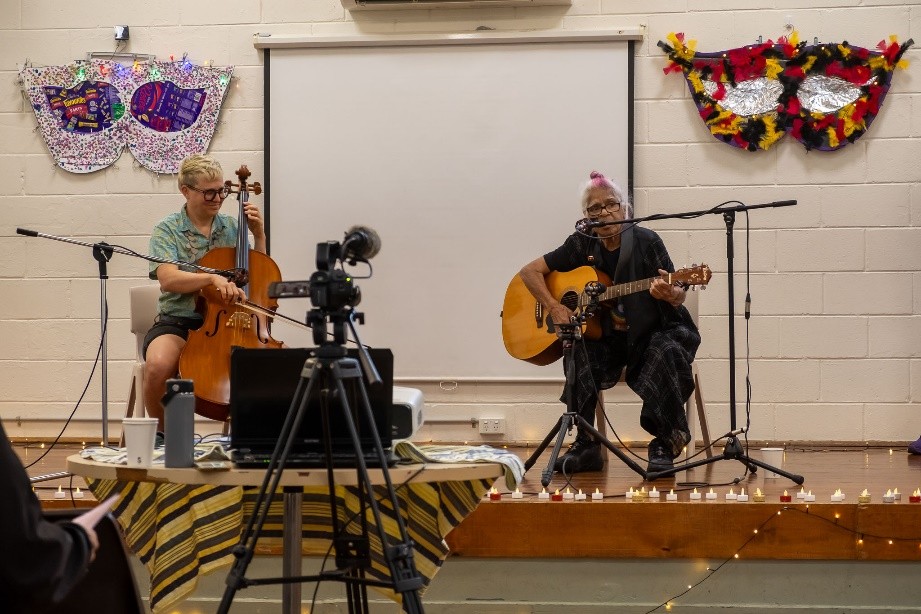
Photo by P Marquis Kyle
The line up included poet, storyteller and comedian, Aunty Maggie Walsh who made us laugh out loud. Kristal West’s music wove themes of identity and cultural legacy from her deep experiences. Kristal follows the lead set by her grandparents Dr Eddie Mabo and Dr Bonita Mabo AO who worked hard as successful land rights activists. Jenny Pineapple with her guitar and profound community connecting songs, First Creatives dance performance and Chocolate Boxx also entertained us.
Two short films were presented: Semah Moak-Wischki produced a short documentary Through Our Eyes exploring growing up Muslim and Aboriginal in north western Australia.
The film Lost Daylight, directed by Dewi Wilson and Callan Murray records the story of Aunty Dawn who is one of 9 siblings. In 1958 Aunty Dawn and her sisters were taken from their parents at Churchill on the fringes of Ipswich and made domestic slaves i.e. under the Queensland government’s complete control. They were allocated to work for wages unpaid to them for the nuns at All Hallows Girls School in Brisbane. Aboriginal slavery was common and legal at that time under the Aboriginals Preservation and Protection Act 1939.
Young Dawn, at age 12 years, did not know why she was taken and kept there. During that time she was completely separated from her family, except for her two sisters Margaret and Carol who suffered similar treatment. We now know this era as the one of stolen generation as she was not allowed to go home until she was 18 years old. There were tears in the audience as the memories of those lost years played on the screen.
Done by Law