
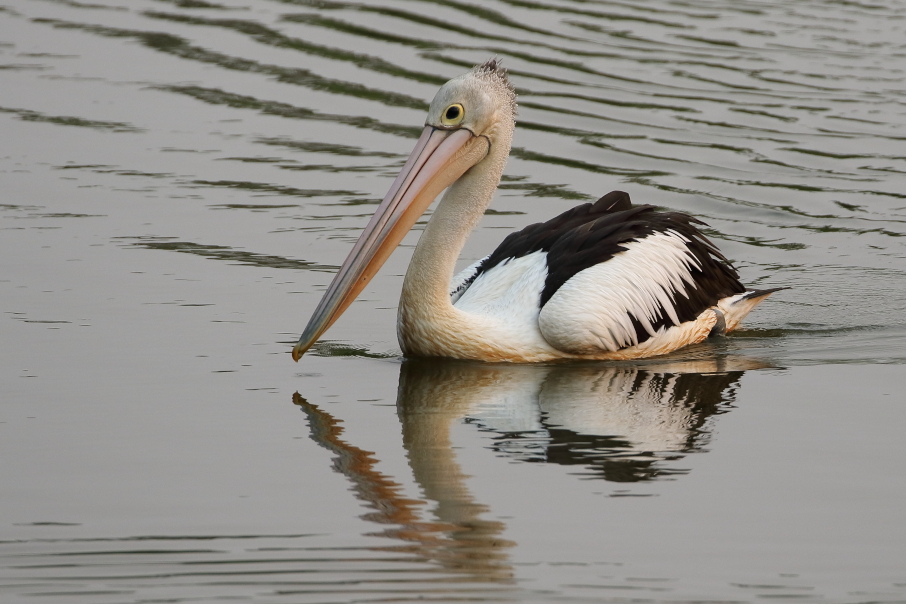
Photo Credit: Pablo Silber. Australian Pelican at West End Ferry Terminal
The oft-quoted poem “A Wonderful Bird Is The Pelican” by Dixon Lanier Merritt espouses the wonders of the Pelican. He was referencing the American bird but could easily have been describing the Australian Pelican. (Look it up here: https://www.familyfriendpoems.com/poem/a-wonderful-bird-is-the-pelican-by-dixon-lanier-merritt)
The pelican is known for its 50cm-long, pink, pouchy bill which it uses for fishing. The Australian Pelican is a large, predominantly white-bodied bird with black wings, white elbow patches, and a black-and-white banded tail. Its eyes are black with a yellow eye ring. Its webbed feet are grey. Here in Kurilpa, we are lucky to live with this true jumbo jet of a bird for most of the year.
The Australian Pelican needs the long stretches of water that the Brisbane River provides to take off, land and fully live its life. It floats up and down the river with the rising and ebbing tides. You’ve seen them roosting on uncapped pontoon struts in and around Kurilpa. The pelicans feed wherever there are schools of small to medium-sized fish.
These birds linger close to South Bank – not far from their eponymous metal sculptures found atop a concrete pillar in the river heading towards Kangaroo Point Cliffs Park. The birds also hang out on the pontoons close to the Goodwill Bridge. They can be seen travelling up beyond the peninsula to UQ, where there are good roosting spots. Sometimes they fly overhead, circling to find thermals to carry them where they need to go. They are social and cooperative, feeding in gregarious groups, rounding up shoals of fish and checking out good feeding areas.
They tend to breed in expansive colonies where there is safety in numbers, flocking inland when the water levels allow. When there is good rain, they look for bodies of water such as Lake Bindegolly, 1,000 kilometers due west of Brisbane to breed. Or, as is happening this very year, they will flock in their thousands to the once in a generation flooding of the inland wonder that is Kati-Thanda/ Lake Eyre.
For more information:
https://www.australiangeographic.com.au/fact-file/australian-pelican-pelecanus-conspicillatus/