
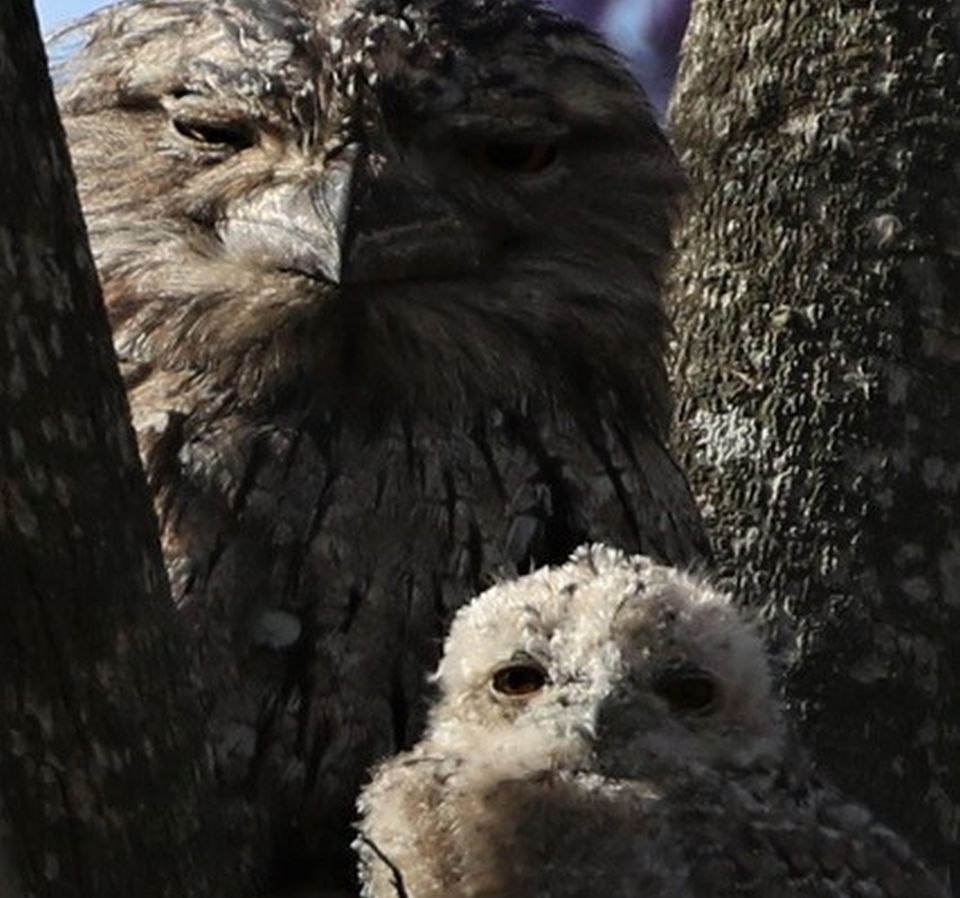
INTRODUCING a brand new series by the local Bird Nerd, featuring some of the beautiful feathered friends with whom we share the neighbourhood.
A small, soft, grey-flecked feather was all the evidence needed to know that a Tawny Frogmouth had visited the yard. As silent as owls – but without the ability to rip their prey to shreds – the Tawny, one of three species of Frogmouth in Queensland, is one of the most common nocturnal birds in 4101.
Known as “ the most Instagram-able of birds”, Tawnies feed mainly on moths and insects, occasionally pouncing on skinks, geckos and small lizards. They are sometimes confused with owls as they are night feeders but they are much lighter and less powerful – even becoming prey for larger owls at times.
Tawnies turn up where there is a community of native and non-native trees. They need a variety to support their needs. This variety is sadly diminishing as we clear our yards for views, but luckily there are still a few parks and street trees in and around Kurilpa where they live.
Their day roosts – where they sleep, preen and ready for the night ahead – are often in non-flowering and non-fruiting trees. They use their grey or brown-flecked plumage to perfectly blend into the background – hiding in plain sight – raising the question: are aware of their colouring? At night, they can be seen perched on power lines, balconies or even roof edges where they survey the land, preen and hunt. They only call pre-breeding season in September or October and their low boom can be hard to hear.
To encourage Tawnies, if you have access to a space where they can perch – a tree or a balcony edge – provide some clean water for them – they get thirsty too. If you are out for an evening walk check along the riverside between Davies and Orleigh Park or in Musgrave Park and South Bank Parklands. Cultivate a sharp eye: they are super silent.
If you are lucky enough to spot a Tawny Frogmouth on the peninsula – and there are 6 known pairs– please avoid pointing at them or showing them that you know where they are. They will move to a new roost and you will probably never see them again in that spot. They are very aware of their place in the food chain. Plus you will cop a very dirty stare.
For more information, go to: https://australian.museum/learn/animals/birds/tawny-frogmouth/
Photo credit: Pablo Silber – Tawny nest with young on Miller Street, West End 2020
Alex Rossi