t’s no secret that the cost of living has sky-rocketed in recent years. According to the latest Consumer Price Index, between January 2025 and January 2026, the cost of food and non-alcoholic beverages climbed by 3.8%. Meanwhile, in the second half of 2025, Woolworths recorded a 16.4% rise in profits and total earnings of $859m, while Coles raked in $511m over the same period.
Given Australia’s well-established supermarket duopoly, you might feel like you have no choice but to continue to line the pockets of Woolworths and Coles executives.
But bulk-buying co-operatives offer an alternative to the dominant supermarket options by tapping into a community’s collective purchasing power.
By buying regularly and in bulk directly from producers, buying groups have access to discounted prices that cut out the middleman — along with the middleman’s mark-up. They also provide a means of purchasing high-quality, organic and ethical produce from local suppliers, who don’t always get stocked at large supermarkets and aren’t always able to sell to consumers directly.
Finally, bulk-buying co-ops are a great way to save food miles and cut back on excess plastic wrapping and packaging, with many groups making use of reusable boxes and jars for storing and transporting products.
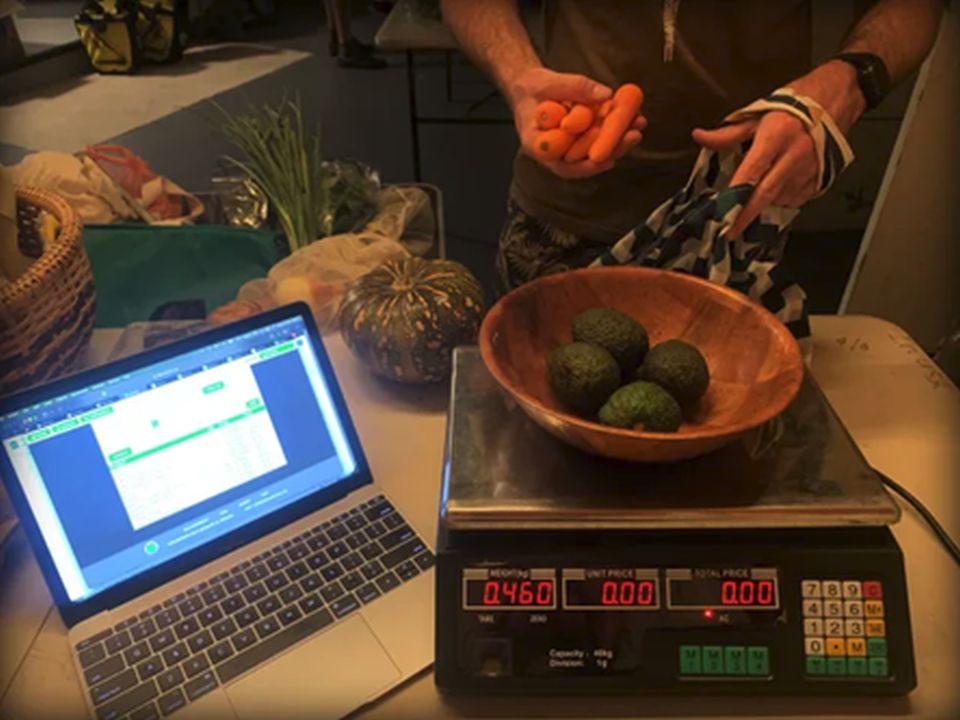
Turnstyle Bulk Buyers is one such buyers group located in Highgate Hill. The group meets weekly at a local sharehouse for a regular market where a wide range of food and household consumables are available for purchase by members. This includes fresh, seasonal fruit and vegetables from Mount Cotton Organic Farm (guaranteed to not have been frozen and shipped from overseas!) pantry staples and dry goods from Sovereign Foods, and fresh bread and pastries from Levain Bakery in Coopers Plains.
Shopping at your local co-op isn’t quite the same as strolling down the aisles of your nearest IGA, however. Buyers groups are typically community-led initiatives that rely on volunteers to keep going.
As such, members are expected to participate in stocktake, setup, ordering, and the various other administrative and organisational tasks necessary for the group to run smoothly. For some members, this isn’t a chore so much as a perk. By bringing a local community together, buying groups can also act like social hubs — giving people that all-too-rare opportunity to get to know their neighbours.
So next time your fridge is starting to look empty, instead of contributing to Woolies’ and Coles’ soaring profits, consider checking out your local bulk-buying group.
See: https://turnstylebb.org/ for details.