
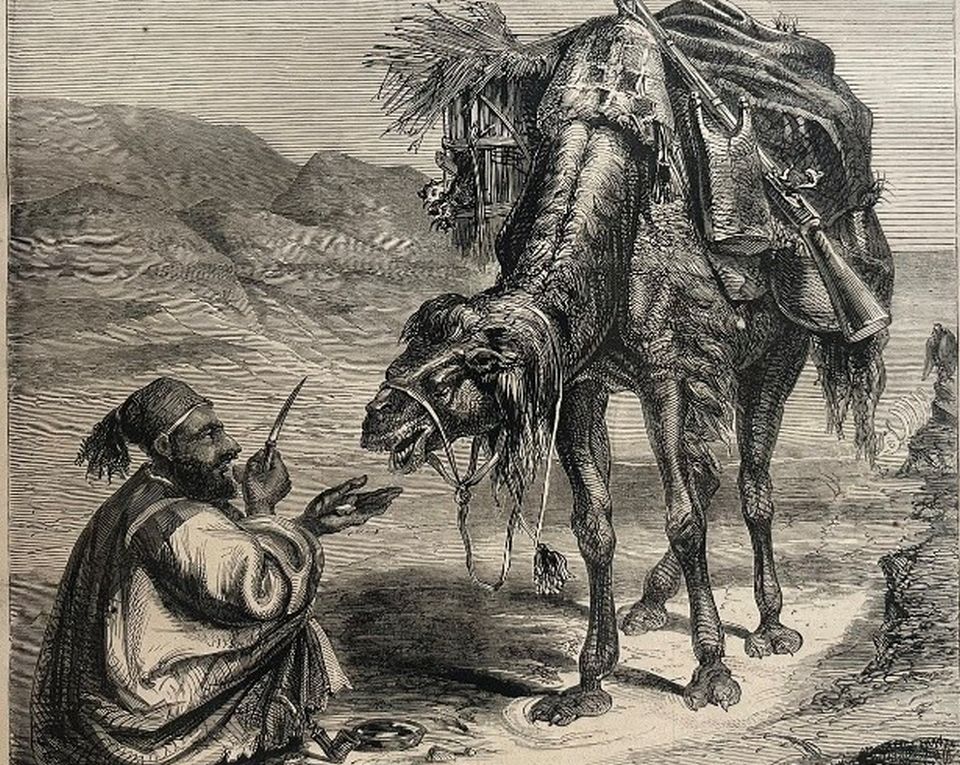
But let’s start somewhere else: Ermoupoli (Hermopoulos) is the capital city for a group of islands around Syros, Greece. Ermoupoli is called “a city of refugees, built on the harmonious co-existence of different traditions and lifestyles”.
In the Industrial Museum at Ermoupoli, the Municipality of Syros is celebrating its 200th anniversary in April this year. In the Industrial Museum I photographed this picture :
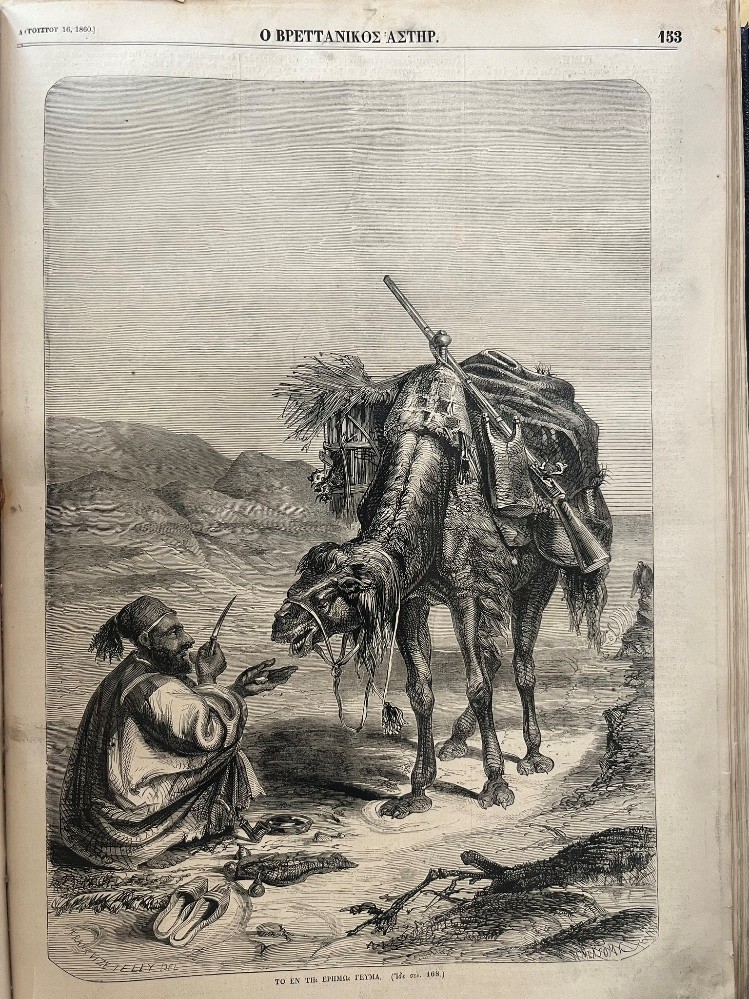
What has all of this got to do with Australia you might ask?
Well, it shows we have not been the only people who have successfully come together as a society of people, drawn together from other places, to make a rich community.
The 11th April 1973 marked the end of the White Australia policy. This policy had commenced with the Immigration Restriction Act 1901. These laws almost entirely stopped non-white people migrating to Australia. It also enabled the deportation of ‘undesirable’ migrants who were already in the country.
The White Australia Policy was openly racist and designed to support the ideal of Australia as a ‘purely’ white nation of European people. Migration from the United Kingdom was favoured and encouraged. A (now infamous) dictation test – in any language a potential migrant was unable to speak – was administered as a way of stopping migrants from outside the United Kingdom from entering Australia. The White Australia Policy also excluded Australia’s Indigenous population until the 1966 referendum succeeded to recognise them as full citizens of Australia.
In the face of this racist attitude people like the poet Henry Lawson recorded a contrary view to the governments of his day. Recently, the new premier of South Australia reminded us of Henry Lawson’s famous poem “The Duty of Australians.” The poem starts:
“Tis the duty of Australians, in the bush and in the town,
To forever praise their country, but to run no other down…”
There came change as Australians learned more of the wider world and, piecemeal, the White Australia Policy was abolished. Most of this learning occurred after WWII. The dictation test was finally abolished in 1958.
Non-discriminatory immigration laws were passed in 1966: All potential migrants were subject to the same rules and visa requirements were equal to all, and all applicants were eligible to become Australian citizens after the same waiting period of five years. Migrants were selected for their skills and ability to contribute to Australian society, rather than their race or national affiliation.
In 1973 the Whitlam government established the policy of multi-culture for Australia. A kaleidoscope of Australian citizens was positively embraced in 1975 when the Racial Discrimination Act was passed making it unlawful for anyone to do things that involved discriminating against a person based on race, colour, descent or national or ethnic origin.
The Prime Minister, Gough Whitlam encouraged the need to learn who might be an Australian. Safe to say, being Australian is really about attitude and behaviour involving equality of rights, marked by the notion of a “fair go” for all, and mutual respect. He wrote that as a nation of immigrants “Australia has always benefited from the labour, skills, knowledge, capital, energy and drive supplied by new settlers.
Let’s not forget, as Henry Lawson said in the last stanza of his poem (with suitably modernised pronouns):
“Tis our duty, when they’re foreign, and English their very young,
To find out and take them somewhere where they’ll hear their native tongue.
To give them our last spare moment, and our pleasure to defer –
They’ll by parents of Australians, as our foreign parents were!
These sentiments are particularly apt here in West End in April with our diverse population of peoples: First Nations, Lebanese, Greek, Vietnamese and many others.
The Vietnamese Lunar New Year Festival occurs every February. A few events coming up: We have the Greek Panyiri celebrating its 50th anniversary in Musgrave Park on 23 & 24 May as well as the annual Lebanese History Walk on a Sunday 14 June . The Clancestry celebration of First Nations storytelling, music, dance, art and culture will be on at QPAC 30 July – 8 August.
Done by Law
April 2026