
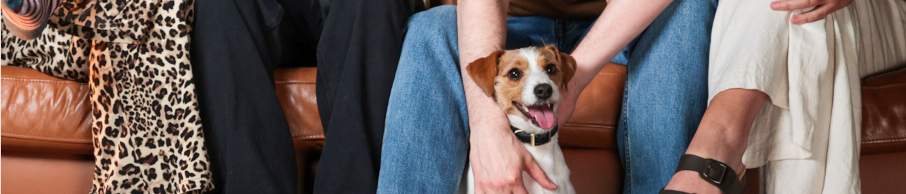
Liam Lowth’s Lucky is a story of quiet betrayal of liminal and conniving circumstances. The story starts as just four people at a dinner party but evolves into something much more sinister.
Brett and Katelynn arrive at Pitt and Sabina’s inner Brisbane apartment on a drearily stormy night (in true Brisbane fashion), to have a long overdue conversation about a previous hindrance of civility between the two couples.
In modern terms, Pitt, played by David Chizedek Vaka, would be best described as a functioning deadbeat. Although currently undertaking a PhD in an entirely ambiguous area of environmental science involving an arguably perverted focus on animal genitalia, he pertains as a stagnant force in his own self-involvement. He is entirely co-dependent on Sabina, played by Meg Bowden and Brett, played by Jack Mahoney.
Sabina is determined for Pitt to nolonger be pushed around by his “mate” Brett, of whom he has always fallen into moral line with since their university days. Sabina desires for him to become his own person beyond the shackles of Brett’s persistent wrath of toxicity, but Pitt spectacularly fails in executing this.
Katelynn, played by Siena D’arienzo, is best encapsulated by the phrase “ignorance is bliss”, willingly following Brett blindfolded into conversations beyond her scope of the world around her, behest of his desire to feel better in his own person by pushing others down along the way.
Initially debating issues of local politics with rampant undertones of casual misogyny at the dinner table, Brett and Katelynn have been invited over to solve an issue of intense moral debate, being their 3-year-old daughter who had been bitten by Pitt’s dog, Lucky.
Despite his utter devastation, Pitt agreed to “sort it out” in the immediacy of the bite incident, in which Brett and Katelynn were of the understanding that the dog had been put down in line with local council regulations.
All four characters become entwined of their own versions of right and wrong, some being more willing to fit into moulds of complacency than others, which is set to the test when Lucky, who was meant to have been put down, both miraculously and unfortunately runs out of a quickly opened door from the fright of thunder, running to his death on the outside road.
Debating the difference of living and existing, Pitt who had picked up Lucky brings him inside, still showing signs of life but on the verge of knocking on heaven’s door.
In a snap moment of morality washing over his conscience, Pitt brashly snaps Lucky’s neck to end his suffering, but in turn elicits a permanently divisive conversation of moral values and to what point humans are compatible in dancing with the devil of another’s moral opposition.
Lucky sparks the conversation of how we can exist outside of our own humanity and in the shoes of others, an attempt to walk a mile upon a path we may have never considered, but now able to attempt to reconcile such possibilities.
Holly Lowe
(c) Photo by Jas Prasser