
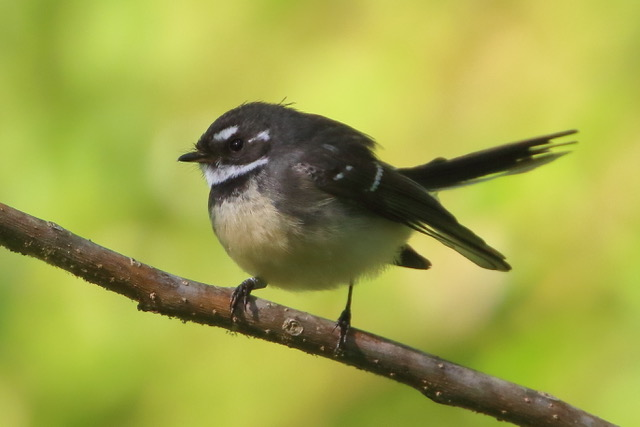
A short, persistent call just on first light on a cool, autumnal morning was the first sign that there was a surprise visitor to the yard. A Grey Fantail had overnighted in the untidy native area and was excitedly, and possibly nervously, foraging for insects. It stayed in the yard as long as it needed to feed, drink and ascertain that it was in dangerous territory. Larger, hungry birds predominate on the peninsula and it was still early: a Gray Fantail would make a good breakfast for a Pied Currawong or a Magpie. This bird needed to move on to a safer haven to survive.
Grey Fantails are a common bird all around Australia but are usually seen in denser bush land where there is enough cover for them to hide away from more aggressive, predatory birds.
Grey Fantails migrate vertically. They leave the summer cool of higher ground such as the D’Aguilar ranges, Mt Cooth-tha and Toohey Forest areas and move to lower, warmer wooded spaces for the autumn and winter months. Then, in the spring they repeat this vertical migration and return to the cooler elevated areas for the summer. Their breeding opportunities depend on the availability of resources: food for their young and available cover for their nest which is delicately woven from twigs and bark held together with spider webs.
Their unobtrusive look belies a feisty, inquisitive and territorial nature. The bird is small – predominantly grey with a long, grey white-tipped and edged tail that is fanned out to catch its prey. It has a grey and white head with a white eyebrow and chin patch. The undersides are buffy off-white.
The Grey Fantail is rarely still, often flying up into the air to snag an unsuspecting insect. This constant movement is what allows the casual observer to get the best views of the bird. This relatively rare (to Kurilpa), seasonal passage migrant has been spotted in mangroves and riparian edges on the peninsula as well as in yards and parks. To find it, just keep those eyes peeled.
For more information, search Grey Fantail: https://bie.ala.org.au
Bird Nerd
Photo credit: Pablo Silber, 2022